Share this with your friends


618-803-8700
Real Estate Company
Your new home awaits
Welcome to the Scout4Homes Blog!
.png)
4 Things To Expect from the Spring Housing Market
4 Things To Expect from the Spring Housing Market

Spring is in full swing, and the housing market is picking up along with it. And if you’ve been wondering whether now is the right time to buy or sell, here’s the inside scoop on why this spring may be a great time to make your move.
1. There Are More Homes for Sale
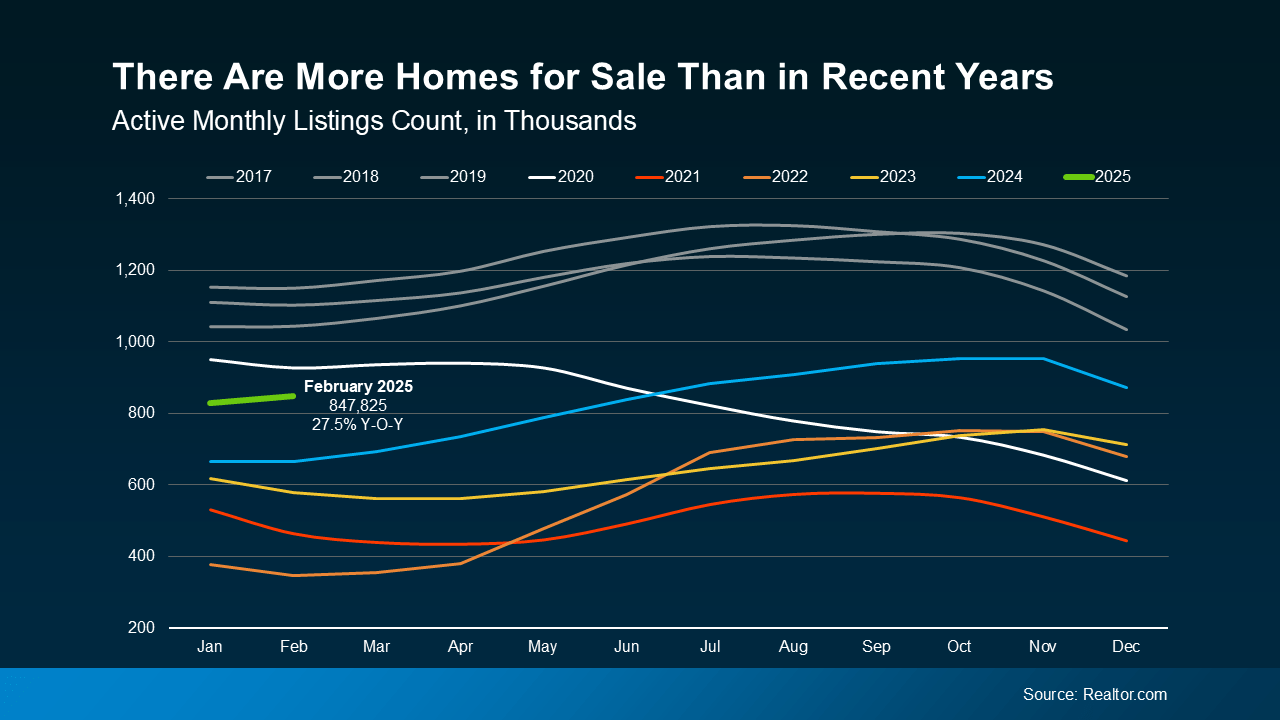
After a long stretch of tight inventory, the number of homes for sale is finally improving. According to recent national data from Realtor.com, active listings are up 27.5% compared to this time last year.
Look at the graph below and follow the green line for 2025. You can see, even though inventory levels still haven’t returned to pre-pandemic norms (shown in gray), that number is higher than it has been going into the spring market over the past few years (see graph below):
Buyers: This means you have more choices, and you can be more selective.
Sellers: With more homes available than in recent years, you’re more likely to find what you’re looking for when you move. And knowing that inventory is still below more normal levels means there will be demand for your home when you sell it, too.
2. Home Price Growth Is Moderating
As inventory grows, the pace of home price growth is slowing down – and that will continue into the spring market. This is because prices are driven by supply and demand. When there are more homes for sale, buyers have more options, so there’s less competition for each house. Rising supply and less buyer competition causes price growth to slow, but it should still remain positive in most markets. As Freddie Mac says:
“In 2025, we expect the pace of house price appreciation to moderate from the levels seen in 2024, while still maintaining a positive trajectory.”
And while prices aren’t dropping at the national level, every market is different. Some areas are seeing stronger price growth, while others are cooling off or even seeing some price declines.
Buyers: The slower pace of growth means prices aren’t rising as quickly as before – and that’s a relief. Any home you buy now is likely to appreciate in value over time, helping you build equity.
Sellers: While prices are still rising, you might need to adjust your expectations. Overpricing your house in a more balanced market could mean it takes longer to sell. Pricing your house competitively is going to be key to attracting offers.
3. Mortgage Rates Are Stabilizing
One of the biggest hurdles for buyers over the past couple of years has been high, volatile mortgage rates. But there’s some good news – overall, they’ve stabilized in recent weeks – and have even declined a bit since the beginning of this year. And while that decrease hasn’t been a big drop, stabilizing mortgage rates has helped make buying a home a bit more predictable. According to Selma Hepp, Chief Economist at CoreLogic:
“With the spring homebuying season upon us, the recent improvements in mortgage rates may help invite homebuyers back into the market.”
Buyers: When mortgage rates are more stable, it’s easier to plan ahead because you have a better idea of what your future payment might be. But remember, rates will continue to be volatile. So, lean on your agent and your lender to make sure you know what the latest mortgage rate means for you.
Sellers: Slightly lower rates that are starting to stabilize are encouraging more buyers to move forward with their plans. That’s good for demand when you’re planning to sell your house.
4. More Buyers Are Returning
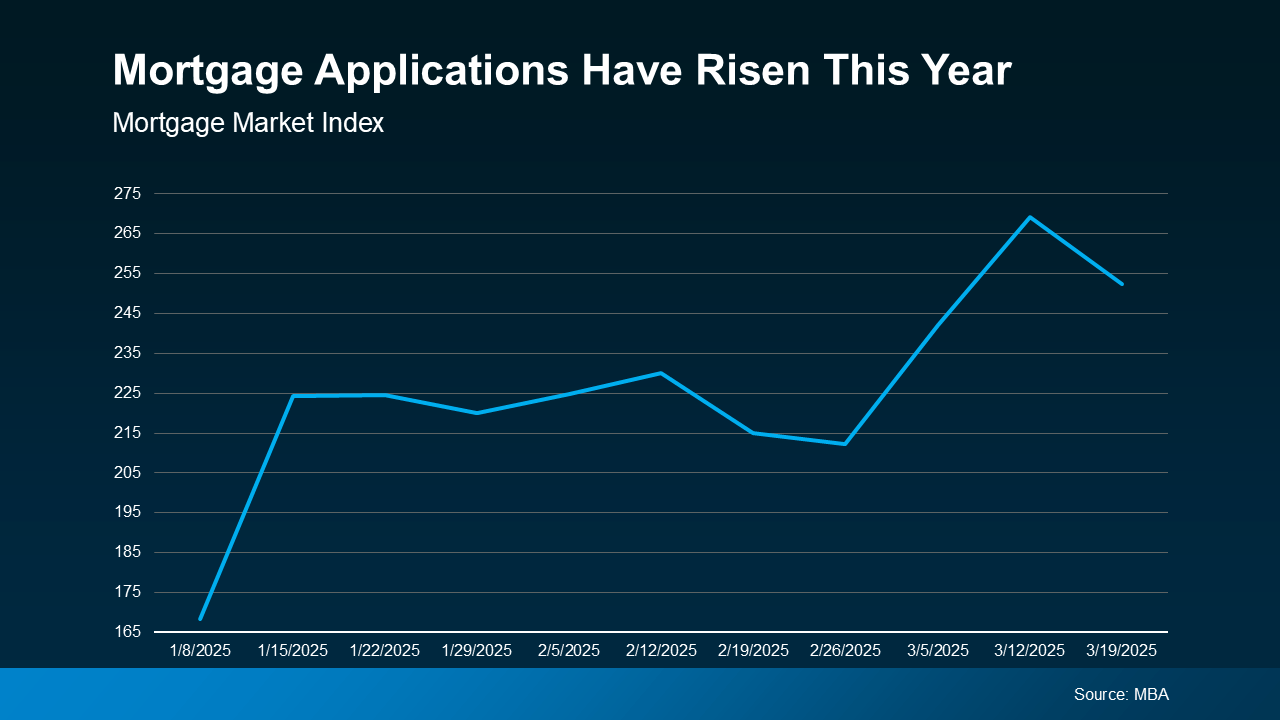
With more inventory, slowing price growth, and stabilizing mortgage rates, buyers are gaining confidence and coming back into the market. Demand is picking up, and data from the Mortgage Bankers Association (MBA) shows an increase in mortgage applications compared to the start of the year (see graph below):
Buyers: Acting sooner rather than later could be a smart move before your competition heats up even more.
Sellers: This is great news for you – more buyers mean a better chance of selling your house quickly.
Bottom Line
Do you have questions about what the spring market means for you? Let’s connect and talk about how to craft your plan this season.
With more homes for sale, slowing price growth, and stabilizing mortgage rates, how will this impact your decision to buy or sell this spring?
Lisa Diserens

📨 Lisa@scout4homes.com ☎️ 618-803-8700
What a Recession Could Mean for the Housing Market
Here’s What a Recession Could Mean for the Housing Market

Recession talk is all over the news, and the odds of a recession are rising this year. And that leaves people wondering what would happen to the housing market if we do go into a recession.
Let’s take a look at some historical data to show what’s happened in housing for each recession going all the way back to the 1980s.
A Recession Doesn’t Mean Home Prices Will Fall
Many people think that if a recession hits, home prices will fall like they did in 2008. But that was an exception, not the rule. It was the only time we saw such a steep drop in prices. And it hasn’t happened since.
In fact, according to data from CoreLogic, in four of the last six recessions, home prices actually went up (see graph below):
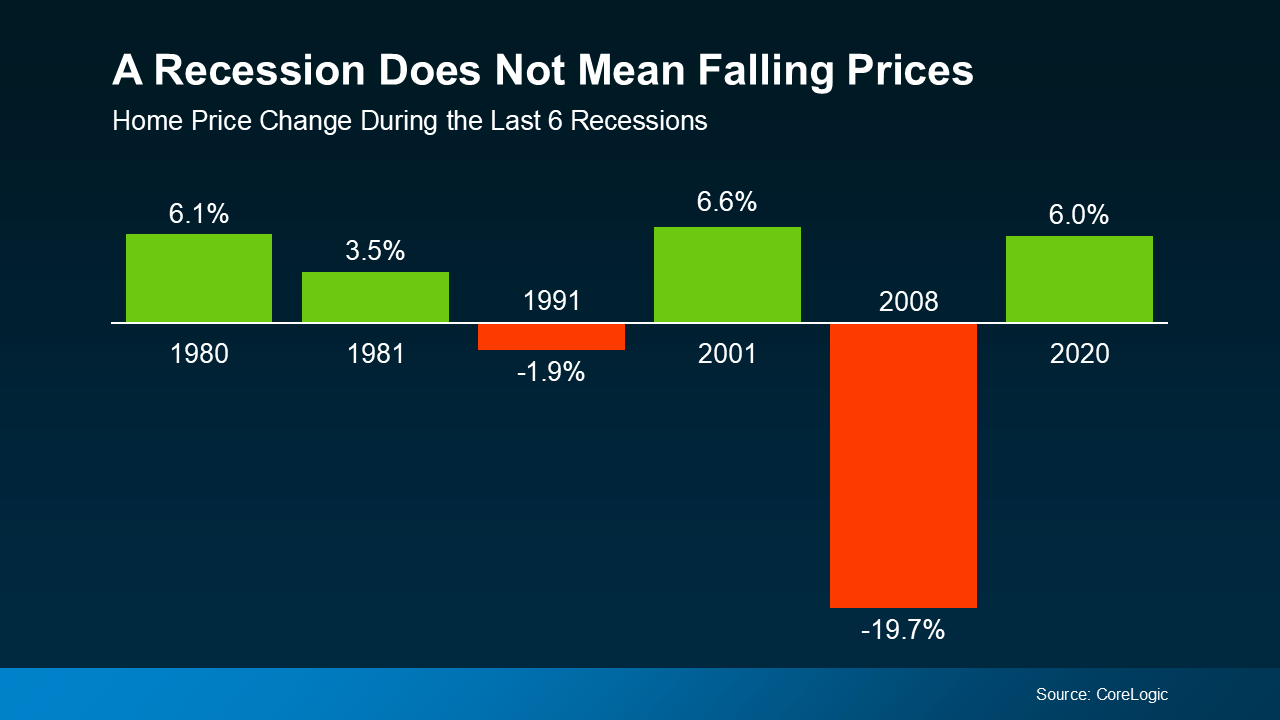
So, if you’re thinking about buying or selling a home, don’t assume a recession will lead to a crash in home prices. The data simply doesn’t support that idea. Instead, home prices usually follow whatever trajectory they’re already on. And right now, nationally, home prices are still rising at a more normal pace.
Mortgage Rates Typically Decline During Recessions
While home prices tend to stay on their current path, mortgage rates usually drop during economic slowdowns. Again, looking at data from the last six recessions, mortgage rates fell each time (see graph below):
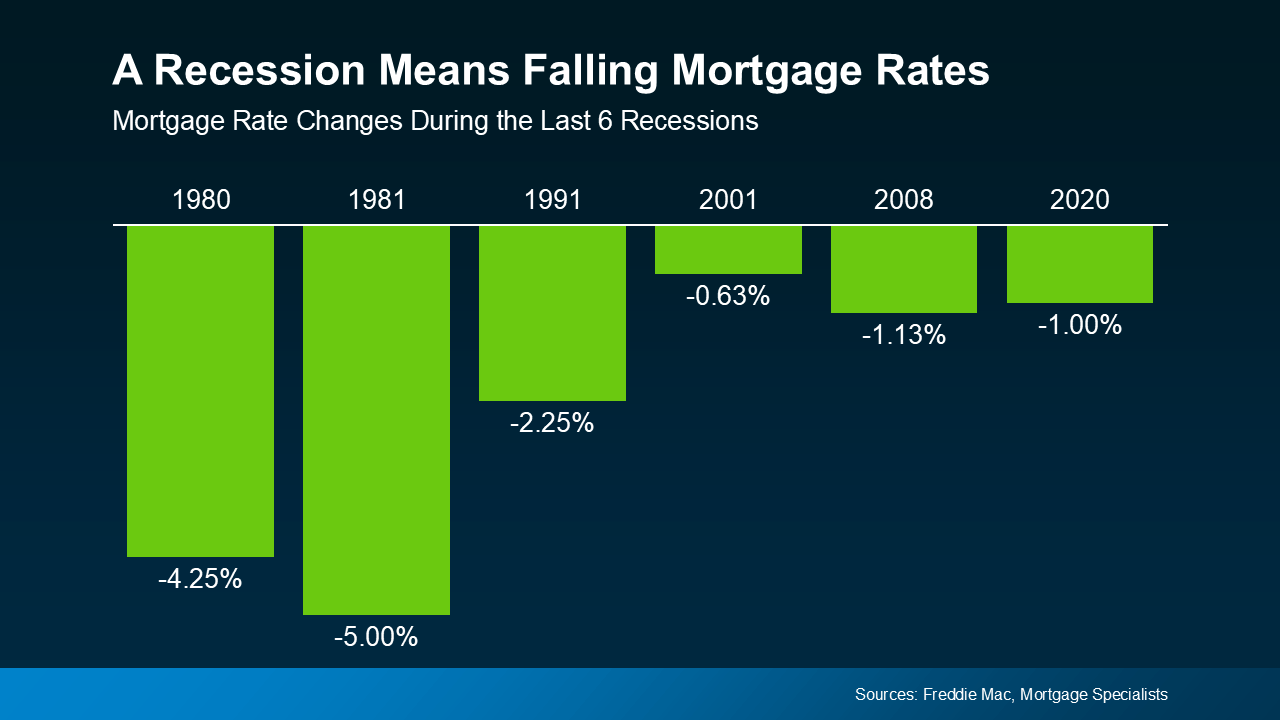
So, a recession means mortgage rates could decline based on the data. While that would help with affordability, don’t expect the return of a 3% rate.
Bottom Line
The answer to the recession question is still unknown, but the odds have gone up. But that doesn’t mean you have to wonder about the impact on the housing market – historical data tells us what usually happens.
When you hear talk about a possible recession, what concerns or questions come to mind about buying or selling a home?
Lisa Diserens
📨 Lisa@scout4homes.com ☎️ 618-803-8700
The #1 Thing Sellers Need To Know
The #1 Thing Sellers Need To Know About Their Asking Price

When you put your house on the market, you want to sell it quickly and for the best price possible; that's generally the goal. But too many sellers are shooting too high right now. They don’t realize the market has shifted as inventory has grown. The side effect? Price cuts are on the rise, but they really don’t have to be. Here’s why.
According to data from Realtor.com, in February, price cuts were the highest they’ve been in any other February since 2019 (see graph below):
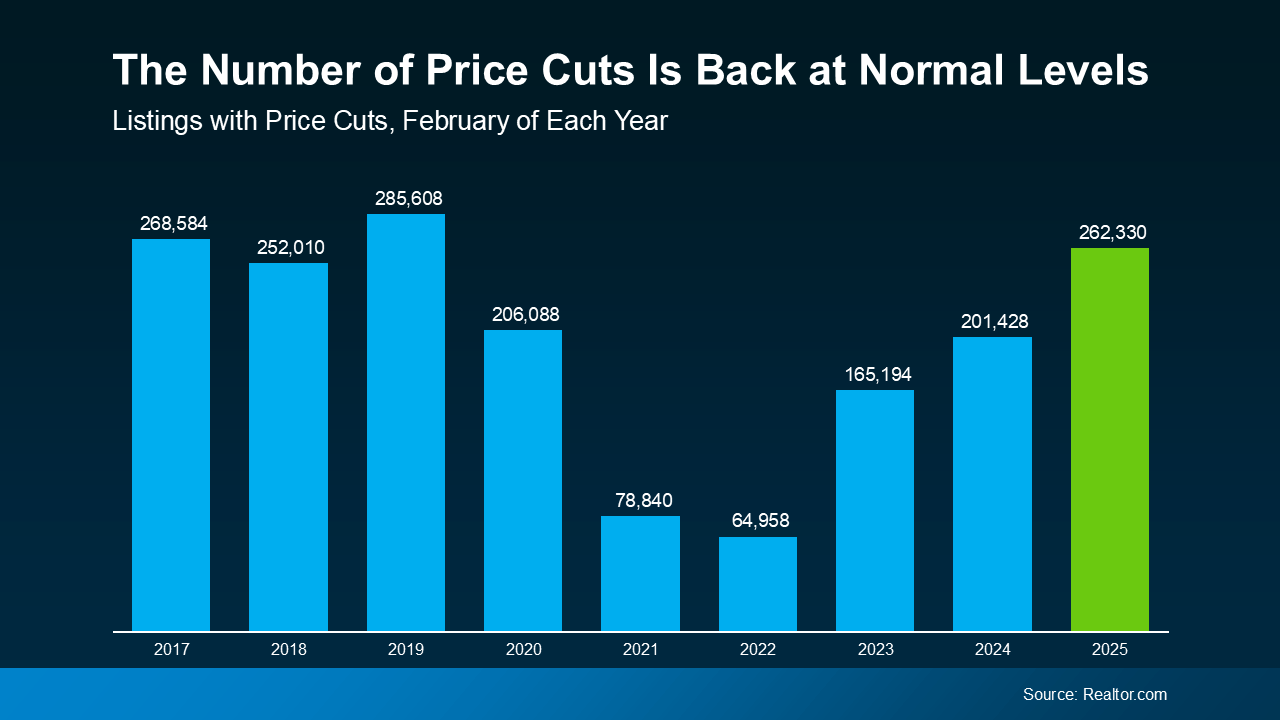
If you consider that 2019 was the last true normal year for the housing market – that's a big deal. We’re getting back to what’s typical for the market.
This isn’t the same frenzied seller’s market we saw a few years ago. You may not get the same price your neighbor did at the height of the pandemic. And that means you may need to reset your expectations.
Because here’s the reality. If you shoot too high and have to lower your price after the fact, you could actually end up walking away with lower offers than if you’d priced it right from the start. So, how do you avoid that? You lean on your agent.
How an Agent Helps You Nail the Right Price
A great agent doesn’t just pull a number out of thin air. They’ll use real data and market trends to make sure your house is priced based on what your specific home is valued at today. So, you’re setting a realistic price – one that’ll draw in serious buyers.
And based on your agent’s analysis of your local market, they may even recommend strategically pricing slightly below market value to help your house attract more eyes and more competitive offers. Here’s how your agent will determine the right number for your house:
- They look at recent sales. What did similar homes in your area actually sell for? Not list for, sell for.
- They analyze local market trends. Your home’s value isn’t just about what you want for it, it’s about what buyers in your area are willing to pay.
- They craft the right strategy. They’ll make sure your home is priced to attract attention and create a sense of urgency among buyers.
Why Overpricing Backfires
Unfortunately, some sellers still ignore their agent’s advice and prefer to start high just to see what happens. The hope being maybe they get their full asking price, or they at least have more wiggle room for negotiation. But pricing high usually ends up costing you, and here’s why:
- Buyers may not even look at it. Today’s buyers are more budget-conscious than ever. If they see a home that seems overpriced, they’re likely to skip it completely rather than try to negotiate.
- It could sit on the market for too long. The longer your home sits unsold, the more buyers will assume something’s wrong with it. That can make it even harder to sell down the line.
- You might end up getting less. Homes that require a price cut often sell for less than they would have if they had been priced right from the start.
You can see that shake out in the graph below. It uses data from the National Association of Realtors (NAR) to show that the longer a house sits, the less it’ll sell for:
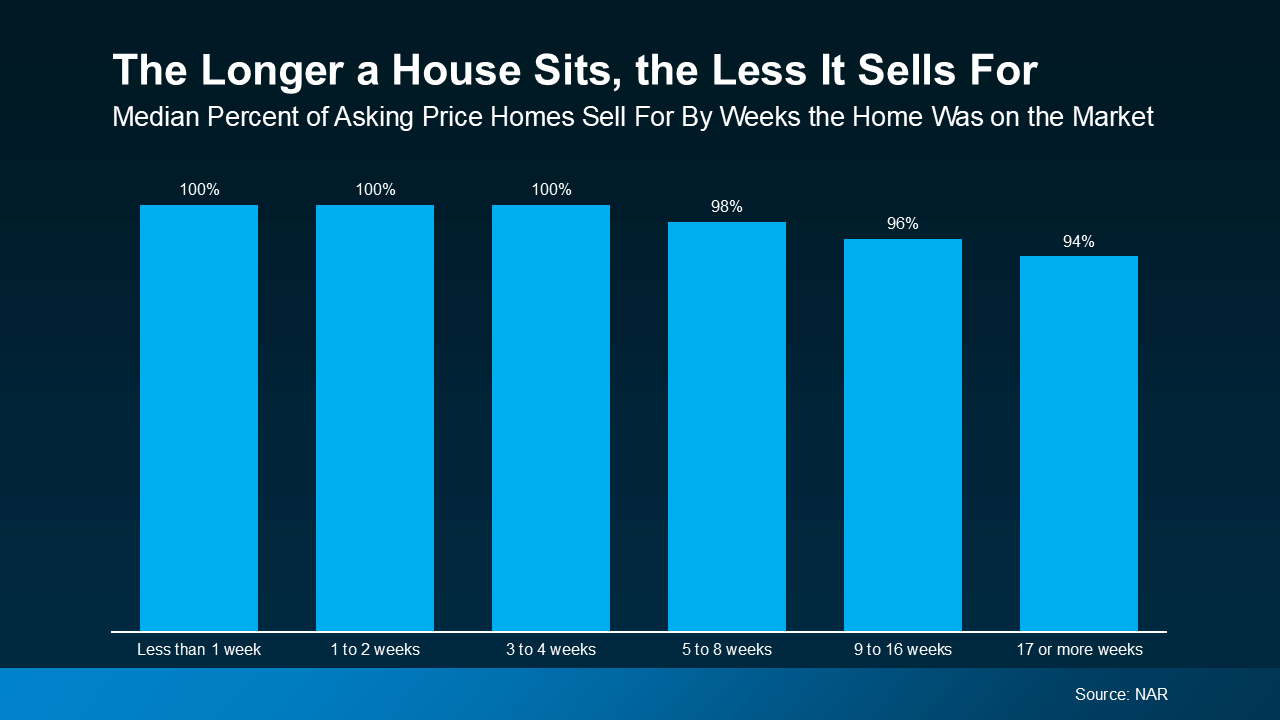
This graph shows that if a house sells within the first 4 weeks it is listed, it usually goes for full price. Based on experience, that's what usually happens to homes that are priced at or just below current market value. If it’s priced right, buyers will be interested, and, ultimately, willing to pay the asking price – or compete with other buyers and even go over asking.
But if a house isn’t priced right, it doesn’t sell as quickly. And this graph shows that, after the first 4 weeks on the market, the price starts to drop from there. That’s because buyer interest falls off the longer it sits. So, it becomes more likely a seller will either accept a lower offer because that’s all they have, or opt to do a price drop to draw people back in.
Bottom Line
The last thing you want is to list too high, watch your house sit, and then have to drop the price just to get attention. Let’s connect so that doesn’t happen to you.
Want to make sure your home sells quickly and for the best price? Let’s go over the right pricing strategy for your house.
Lisa Diserens
📨 Lisa@scout4homes.com ☎️ 618-803-8700
House Hunting Just Got Easier
House Hunting Just Got Easier – Here’s Why

If you’ve been frustrated by the lack of homes for sale over the past few years, here’s some good news. You have more options, so it may finally be time to kick off your home search again. As Daryl Fairweather, Chief Economist at Redfin, explains:
“Now is the best time to buy in the last two years. Mortgage rates are comparable to what they were two years ago, and prices remain high. However, there is significantly more inventory . . .”
The number of homes for sale has grown compared to last year, and even more options are on the way. While this is typical for the busy spring season, here’s why this is so important right now.
Homeowners are listing their houses at the highest pace we’ve seen in a while.
New Listings Are on the Rise
Over the past few months, the number of new listings, or homes that have recently been put on the market for sale, has been steadily rising (see graph below):

Basically, more people are putting their homes on the market each month – whether they’re moving up, downsizing, or relocating. And this trend is a positive sign for the housing market.
Sellers who may have been on the fence the past few years are starting to jump back in. That’s helping to boost overall inventory and create better opportunities for both buyers and move-up sellers alike.
But it’s not just that the number of fresh options is up month-over-month; there’s also been a jump compared to last year.
According to Realtor.com, new listings in March were 10.2% higher than last year, making it the biggest March for new listings since 2021 (see graph below):

For anyone who’s been waiting for more choices, this is exactly what you’ve been hoping for – because more homes coming onto the market means more options and a better shot at finding one that fits your needs.
To make sure you don't miss out on any of the latest listings for your area, lean on a local real estate agent.
Bottom Line
If you're thinking about making a move this spring, now may be the time to start exploring your options. With more fresh listings hitting the market, you may find a home you love waiting for you.
What features or neighborhoods are at the top of your wish list?
Lisa Diserens
📨 Lisa@scout4homes.com ☎️ 618-803-8700
How Long Will it Take to Sell My House
.jpg)
Market Update: Days on Market Trends in Our Area
In the past 90 days, average days on market (DOM) have increased across much of the country, with some areas seeing homes sit for as long as 120 days. Fortunately, our local market—Shiloh, O'Fallon, Belleville, Swansea, Fairview Heights, Millstadt, Mascoutah, and the areas surrounding Scott Air Force Base—has fared much better. Here, we’re averaging just 40-50 days on market.
But you may be wondering, "Why are some homes still sitting for over 90 day?🤔" Let me explain:.jpg)
Over the past few years, the strong seller’s market made it easier to sell homes, often with minimal preparation. Many sellers—and even some agents—grew accustomed to listing properties "AS IS" and still receiving competitive offers. However, as prices climbed and interest rates increased, buyers became less willing or able to purchase "AS IS" properties. The result? Many of these homes are sitting unsold.
On the other hand, savvy sellers and agents are pricing homes competitively, leading to quicker sales—often within just a few weeks.
So, what does this mean for you as a seller?
Think carefully about how long you’re willing to let your home sit on the market. Pricing your home aggressively upfront can save you from the frustration of waiting, wondering, and eventually lowering the price.
The best-case scenario? Pricing your home right from the start could result in multiple offers and even a sale above your asking price.
When you’re ready to sell, let’s work together to make it happen efficiently and successfully!
Lisa Diserens
📨 Lisa@scout4homes.com ☎️ 618-803-8700
I don't want to give up my low rate to sell
Should You Move If Your Current Mortgage Rate Is in the 2s?
.jpg) With interest rates currently in the 6-7% range, many homeowners with ultra-low mortgage rates are hesitant to make a move. If you’re worried about giving up your once-in-a-lifetime rate, you’re not alone—I hear this concern all the time.
With interest rates currently in the 6-7% range, many homeowners with ultra-low mortgage rates are hesitant to make a move. If you’re worried about giving up your once-in-a-lifetime rate, you’re not alone—I hear this concern all the time.
But here’s the thing: You don’t have to stay put just because of your rate. Let’s explore your options!
1. Keep Your Current Home as a Rental
If your current mortgage rate is significantly lower than what you’d pay for a new home, turning your home into a rental property could be a smart financial move. With a lower payment, you may be able to generate rental income that offsets your new mortgage.
Of course, this depends on your ability to qualify for both mortgages and your willingness to become a landlord. If this sounds like a possibility, let's run the numbers and see if it's the right strategy for you.
2. Buy Now, Refinance Later – "Date the Rate, Marry the House".jpg)
You’ve probably heard the old adage: "Date the rate, marry the house." This means that while interest rates can (and will) change, the right home is a long-term investment. If you find your dream home now, you can lock in today’s price and refinance later when rates drop.
The good news? Mortgage rates fluctuate daily, and they won’t stay high forever. Many lenders are even offering free refinancing options for future rate reductions, making it easier to transition without long-term financial strain.
Final Thoughts
If your home no longer fits your needs, don’t let interest rates be the only factor in your decision. There are ways to make a move while still being financially savvy!
Have questions? Let’s discuss your options and create a plan that makes sense for you.
📞 Lisa Diserens, RE/MAX Signature Properties
📍 618-803-8700
Your dream home might still be within reach—let’s make it happen! 🏡✨.
Should I Sell My House Now
Should I Sell My House Now?
This is one of the biggest questions in real estate today, and the answer is simple: IT DEPENDS. Selling your home is a major decision, and timing is everything. Here are a few key factors to consider when deciding if now is the right time for you.
1. Why Are You Moving?
If your move is driven by a life event—such as a job change, marriage, divorce, growing family, downsizing, or even relocating after retirement—then the answer is clear: Yes, you should sell now. Selling your home allows you to make a transition that better fits your current needs.
However, if you’re considering selling for other reasons, ask yourself:
- Can I buy what I want right now?
- Is it financially beneficial to buy in this market?
For example, if you're moving to an area where prices have dropped and homes are sitting on the market longer, you may have more purchasing power. If you can price your current home competitively while taking advantage of favorable conditions elsewhere, now could be the perfect time to sell. If not, let’s discuss a strategy to determine when it makes the most sense.
2. What’s Your Buying Plan?
Before listing, consider:
✔ Are you upsizing or downsizing?
✔ Is there inventory available that fits your needs?
✔ What’s your Plan B if you sell quickly but don’t find the right home?
A solid strategy ensures you’re prepared for all scenarios:
- If your home sells immediately – Where will you go? Do you have temporary housing lined up?
- If your home sits on the market for 30+ days – Do you have flexibility with your timeline?
- If you sell but can’t find a new home – Will you rent short-term? Stay with family?
Planning ahead ensures a smooth transition when making your move.
Final Thoughts
Deciding whether to sell now or wait depends on your personal goals and market conditions. If you’re unsure, let’s have a conversation to create a strategy that works for you.
📞 Lisa Diserens, RE/MAX Signature Properties
📍 618-803-8700
Your home sale should be on your terms—let’s make it happen! 🏡✨
Should I Buy a House Now or Wait?
.jpg)
Should You Wait for Lower Interest Rates to Buy a Home? Most Buyers Are Getting This WRONG
– Here’s Why
Many buyers are hesitant to jump into the market, thinking they should wait until interest rates drop. While this sounds logical on the surface, it’s often not the best strategy. In fact, waiting could cost you more in the long run. Here’s why buying now might be the smarter move:
🏠 Sellers Are Feeling the Pressure
Right now, homes are taking longer to sell. When properties sit on the market, sellers start to feel nervous—especially if they’ve already moved and are carrying two mortgages.
What does this mean for buyers?
- Better Prices: Nervous sellers are more willing to lower their asking price.
- Closing Cost Assistance: Many sellers are offering incentives, like covering part of your closing costs.
- Negotiation Power: Buyers can often negotiate repairs or other concessions that wouldn’t be possible in a hotter market.
Pro Tip: You can refinance later when rates improve, but you can’t turn back time to take advantage of today’s buyer-friendly market conditions.
📉 When Rates Drop, Competition Heats Up
It’s no secret: When interest rates go down, more buyers flood the market. That’s great for sellers—but not for buyers.
Here’s what happens when demand increases:
- Higher Prices: More buyers competing for fewer homes drives prices up.
- Bidding Wars: Multiple offers on the same property often force buyers to bid above asking price.
- Reduced Leverage: Sellers in high-demand markets have no reason to compromise on price, repairs, or closing costs.
Waiting for lower rates could leave you paying more for a home, both in upfront costs and monthly payments.
🎯Take Advantage of Today’s Opportunities
The current market offers a rare chance to secure your dream home under favorable conditions. With less competition, you have more power to negotiate and more options to choose from.
Here’s why buying now makes sense:
- Lock in a Great Deal: Get the best price and terms while sellers are motivated.
- Refinance Later: When rates drop, you can refinance to lower your monthly payment without missing out on today’s market conditions.
- Avoid Future Bidding Wars: Secure your home before competition pushes prices higher.
🏆The Bottom Line
Don’t let fear of interest rates keep you from achieving your homeownership goals. Right now, buyers have more leverage, better opportunities, and less competition than they will once rates drop and the market heats up again.
If you’ve been dreaming about buying a home, now is the time to act. Let’s discuss your options and make a plan to turn your dreams into reality.
Ready to Start Your Home Search?🔍
Contact me today to explore your options and take the first step toward your dream home!
Lisa Diserens
📧 Lisa@scout4homes.com 📞 618-803-8700
2025 Market Update
💡Get the Scoop on Today’s Market
🏘️Real Estate is Local
First, remember that real estate is local. What’s happening in another city or state doesn’t necessarily reflect what’s happening in your neighborhood.
Here in the Metro East, we’ve noticed a slight rise in days on market, but it’s far from dire. If you price your home competitively and avoid an “AS IS” sale, your property should sell within two weeks. However, if you choose to test the market with an inflated price or overlook needed improvements, expect a longer timeline and potentially a lower final sale price.
🤝Opportunities for Buyers
If you’re in the market to buy, this is a promising time. There’s more inventory to choose from and greater room for negotiation than we’ve seen in recent years.
For investors, this is an especially exciting opportunity. Many sellers who opt for “AS IS” sales are leaving room for buyers like you to negotiate and add value. If you’ve been considering purchasing a rental property or two and have the skills to handle some renovations, now is an ideal time to act.
📈What’s Next?
We anticipate the market will shift again as interest rates decrease, a trend we expect to see within the next 30 days. Lower rates will likely bring more buyers into the market, increasing competition for the same properties. Historically, this leads to higher prices and multiple-offer situations.
Some areas of the country are already experiencing this shift, and we anticipate the Metro East will follow suit within 60 days.
🌴Thinking About Relocating or a Second Home?
While the Metro East market remains active, a few states are experiencing significant slowdowns, with homes taking longer to sell. If you’re considering relocating or purchasing a second home, reach out. I can research market conditions in your desired area and connect you with a trusted agent who knows the local market inside and out.
📞Let’s Chat!
Whether you’re buying, selling, or just exploring your options, I’m here to help. Feel free to reach out for personalized advice or to discuss your real estate goals.
Lisa Diserens
📨 Lisa@scout4homes.com ☎️ 618-803-8700
:format(webp):quality(80)/u.realgeeks.media/lisadiserens/News_letter_cover_Nov.png)